Non-sparking tools: what they are and when you need them
Why oil & gas, marine and petrochemical sites use aluminium bronze and beryllium copper tools — and how to use them safely.
By Al Faiz team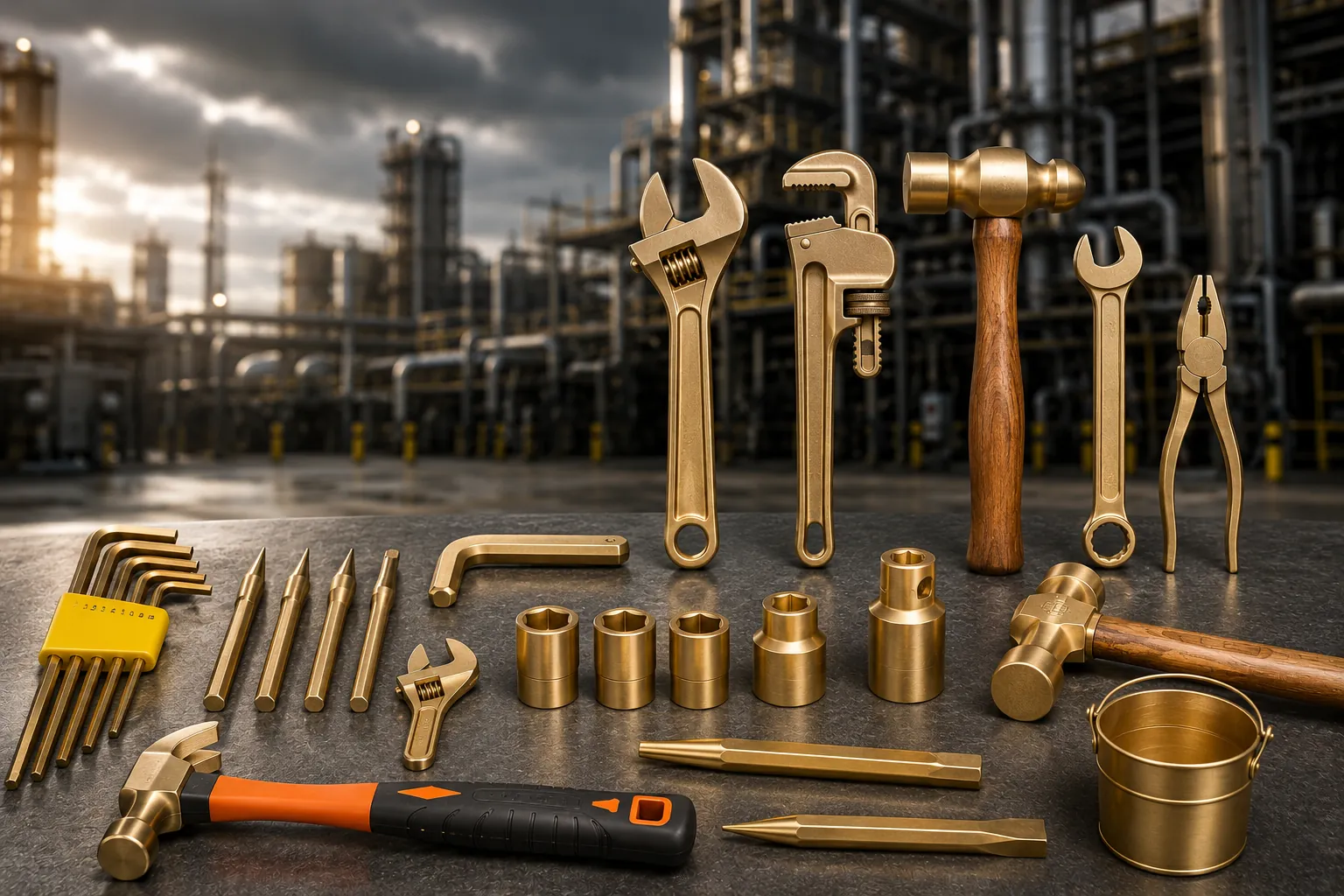
On oil & gas sites, refineries, tank farms and ships, a single spark can ignite flammable gas, vapour or dust. Non-sparking tools are made to reduce that risk. Here is what they are, where they are used and what to keep in mind.
What makes a tool “non-sparking”?
Instead of hardened steel, these tools are made from copper alloys — mainly aluminium bronze and beryllium copper. If they strike or rub against a surface, any sparks they produce carry far less energy than steel sparks. The alloys are also non-magnetic and resist corrosion, which makes them useful in marine and chemical environments too.
Where are they used?
- Oil & gas production, refineries and petrochemical plants
- Fuel and chemical storage tanks, pipelines and pump stations
- Ships, offshore platforms and shipyards
- Paint shops, solvent stores and gas plants
- Flour mills, grain stores and other places with explosive dust
Aluminium bronze or beryllium copper?
| Aluminium bronze | Beryllium copper | |
|---|---|---|
| Strength & hardness | Good | Higher — closer to steel tools |
| Price | More affordable | Higher |
| Typical choice | General maintenance work | Heavy-duty work and high torque |
Common non-sparking tools
Spanners (open, ring and combination), adjustable and pipe wrenches, hammers and mallets, sockets, chisels, scrapers, pliers and screwdrivers. Many sites order complete kits so every crew has the same set.
Good to know
- They are softer than steel. Use the right size, don’t extend handles with pipes and replace worn tools.
- Keep them clean. Steel particles stuck to a tool can still spark — store them separately from steel tools.
- Don’t grind or re-sharpen beryllium copper without proper dust controls; the dust is hazardous.
- The work surface matters too. Striking rusty or hard steel can produce sparks from the steel itself.
- Non-sparking tools are one part of safe work in hazardous areas — always follow your site’s permits, gas testing and safety rules.
Need a set for your site?
Send us your list or the sizes you need — single tools or full kits. See our non-sparking tools.